

AI Integration Moves Beyond Marketing Into Cosmetic Research
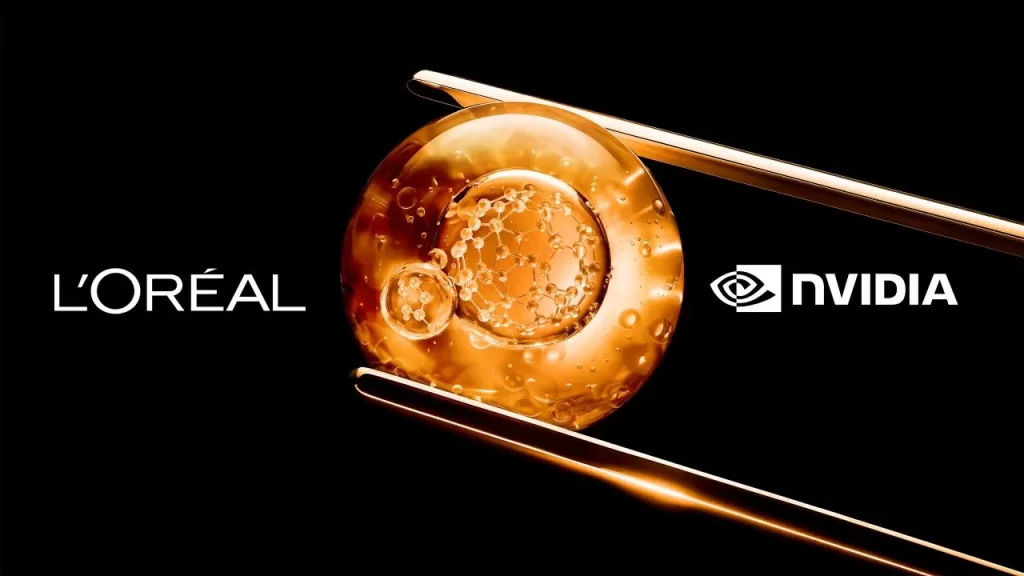
French beauty company L’Oréal and technology firm Nvidia have expanded their artificial intelligence partnership into cosmetic research and development, focusing on AI-driven computational chemistry and formulation discovery.
Until now, the collaboration primarily focused on marketing and advertising applications. With the integration of Nvidia’s “Alchemy” machine learning framework into L’Oréal’s Research & Innovation ecosystem, the partnership is now targeting ingredient simulation, formulation prediction, and molecular-level analysis for beauty applications.
According to the companies, the initiative aims to support faster discovery of skincare and cosmetic formulations through AI-powered simulation of molecular interactions and ingredient behaviour at an atomic scale.
Focus on Ingredient Simulation and Faster Formulation Discovery
L’Oréal stated that Nvidia’s AI platform will allow researchers to simulate ingredient performance and texture in virtual environments, enabling scientists to test thousands of formulation variables simultaneously.
The company claims the approach could significantly reduce the transition time from laboratory concept to finished cosmetic product while improving formulation efficiency and ingredient optimisation.
According to L’Oréal, the AI-driven discovery process may be up to 100 times faster than conventional research methods. Current focus areas include:
- Photoprotection
- Skin tone management
- Skin protection technologies
- Preventive skincare innovation
The company added that AI simulation may help identify optimal formulations before physical laboratory validation begins, potentially accelerating R&D workflows and prototype screening processes.
Strategic Implications for Cosmetic Ingredient Innovation
The collaboration highlights increasing adoption of artificial intelligence and computational chemistry tools across the beauty and personal care sector.
For cosmetic manufacturers, formulation laboratories, and ingredient developers, the development signals growing industry interest in:
- AI-assisted formulation development
- Predictive ingredient modelling
- Digital formulation simulation
- Accelerated active screening
- Computational chemistry in cosmetic R&D
The partnership also reflects broader efforts to improve speed-to-market, formulation precision, and research scalability within advanced skincare innovation pipelines.
As AI integration in cosmetic science continues to evolve, companies may increasingly combine machine learning, molecular simulation, and laboratory validation to support next-generation ingredient and product development strategies.