
By Dr. Sudhakar Prasad, Senior Consultant – Plastic & Cosmetic Surgery, Apollo Hospitals
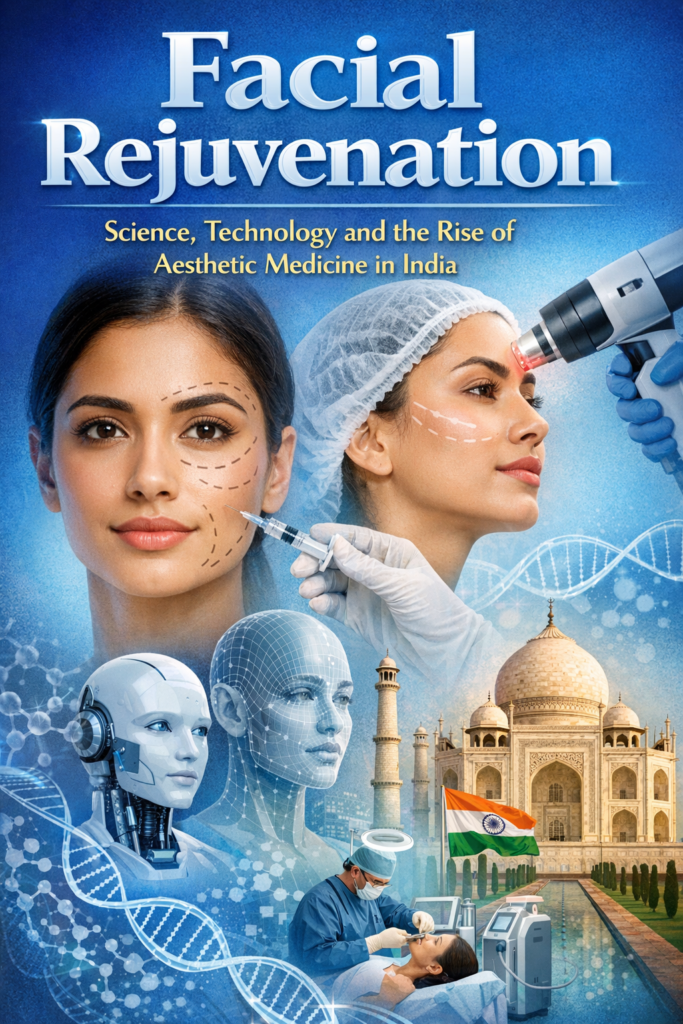
Facial rejuvenation has moved far beyond the traditional perception of cosmetic enhancement. Today, it represents a sophisticated intersection of medical science, advanced technology and aesthetic precision. With increasing awareness of skin health and appearance, patients are seeking treatments that restore youthful facial harmony while preserving natural features.
This shift is transforming facial rejuvenation into one of the most dynamic segments of the global aesthetic medicine industry.
Understanding the Biology of Facial Ageing
Facial ageing is a complex biological process involving changes at multiple anatomical levels. While wrinkles are often the most visible sign, ageing affects deeper structures as well.
The process typically involves:
- Loss of collagen and elastin in the skin
- Fat redistribution and volume depletion
- Bone resorption in facial structures
- Reduced skin hydration and elasticity
- Pigmentation and texture changes due to environmental exposure
Lifestyle factors such as stress, sun exposure, pollution and smoking can accelerate these changes.
“Facial ageing is not just about wrinkles; it is about structural changes that occur in the skin, fat and bone layers of the face,” says Dr. Sudhakar Prasad. “Modern rejuvenation techniques focus on restoring balance and volume rather than simply tightening the skin.”
Growth of the Aesthetic Medicine Market
The rising demand for facial rejuvenation reflects a broader expansion of the medical aesthetics industry.
India’s medical aesthetics market was valued at around USD 598 million in 2024 and is projected to reach USD 1.27 billion by 2033, driven by growing awareness of cosmetic procedures and increasing disposable incomes.
In parallel, the cosmetic surgery industry is expected to reach USD 11.5 billion by 2030, growing at a CAGR of approximately 15.6%, reflecting strong consumer demand for aesthetic enhancement.
According to industry reports, India already ranks seventh globally in the number of aesthetic procedures, with the country accounting for about 7.4% of global cosmetic surgeries.
This growth is being driven by several factors, including rising aesthetic awareness, medical tourism, technological advancements and the influence of social media.
Rise of Minimally Invasive Treatments
One of the most significant trends in facial rejuvenation is the growing preference for minimally invasive procedures.
Non-surgical treatments such as botulinum toxin injections, dermal fillers, laser resurfacing and radiofrequency-based skin tightening are increasingly popular because they offer visible improvements with minimal downtime.
Industry data indicates that non-surgical treatments now account for nearly 60% of aesthetic procedures in India, reflecting the shift toward safer and quicker interventions.
Demand for injectable treatments has also surged in urban centres, with Botox procedures increasing by around 30% and dermal fillers by 25% in major cities such as Delhi and Mumbai.
“Patients today prefer treatments that are subtle, safe and require minimal recovery time,” explains Dr. Prasad. “The goal is enhancement, not transformation.”
Surgical Solutions for Advanced Ageing
While non-surgical treatments are ideal for early ageing, surgical procedures remain the gold standard for addressing significant skin laxity and structural changes.
Key surgical facial rejuvenation procedures include:
- Facelift (rhytidectomy)
- Neck lift
- Eyelid surgery (blepharoplasty)
- Fat grafting and volume restoration
These procedures reposition deeper tissues, remove excess skin and restore youthful contours. Advances in surgical techniques have significantly improved outcomes, allowing surgeons to deliver natural-looking results with shorter recovery periods.
Role of Regenerative Medicine
Another promising development in facial rejuvenation is the integration of regenerative medicine.
Techniques such as cell-enriched fat grafting, platelet-rich plasma (PRP) and stem-cell-based therapies are being explored to improve skin quality, enhance healing and stimulate collagen production.
These treatments harness the body’s own biological mechanisms to repair tissue and rejuvenate skin.
“Regenerative therapies are changing the landscape of aesthetic medicine,” says Dr. Prasad. “They allow us to enhance tissue regeneration and improve long-term outcomes in facial rejuvenation.”
Technology Transforming Aesthetic Practice
Technology is playing a critical role in advancing facial rejuvenation.
Energy-based devices such as laser, ultrasound and radiofrequency systems are widely used for skin tightening and resurfacing. Surveys indicate that more than 60% of urban aesthetic clinics in India now utilize energy-based devices for rejuvenation treatments.
In addition, artificial intelligence-driven skin analysis tools are improving treatment planning by enabling more accurate assessment of facial ageing patterns.
These technologies are helping clinicians deliver highly personalized aesthetic solutions.
The Future of Facial Rejuvenation
The future of facial rejuvenation lies in personalized, combination-based treatment strategies that integrate surgery, minimally invasive procedures and regenerative therapies.
As awareness grows and technology continues to evolve, the demand for aesthetic treatments in India is expected to accelerate further. Industry estimates suggest that the aesthetic services market could exceed USD 3.6 billion by 2035, reflecting strong long-term growth potential.
For clinicians and the broader aesthetic industry, the challenge will be to balance innovation with patient safety and evidence-based practice.
“Ultimately, facial rejuvenation is both an art and a science,” concludes Dr. Prasad. “Our goal is not to change a person’s identity but to restore confidence by enhancing their natural features.”