

Dabur India Ltd’s ₹60 crore investment in RAS Luxury Skincare marks a strategic pivot toward high-growth, premium clean beauty segments an area where legacy FMCG players have historically lagged behind agile D2C brands.
Dabur’s core strength has long been in mass-market Ayurveda-led FMCG products, with strong rural penetration and a trusted heritage positioning. However, shifting consumer preferences especially among urban millennials and Gen Z have driven demand for premium, natural, and ethically sourced skincare. This is where RAS Beauty enters as a complementary asset.
Founded as a farm-to-face luxury skincare brand, RAS Beauty differentiates itself through small-batch production, organic sourcing, and artisanal branding. Its positioning sits at the intersection of clean beauty and indulgence, a niche that is growing rapidly but requires strong storytelling and digital-first engagement areas where startups excel but often lack scale.
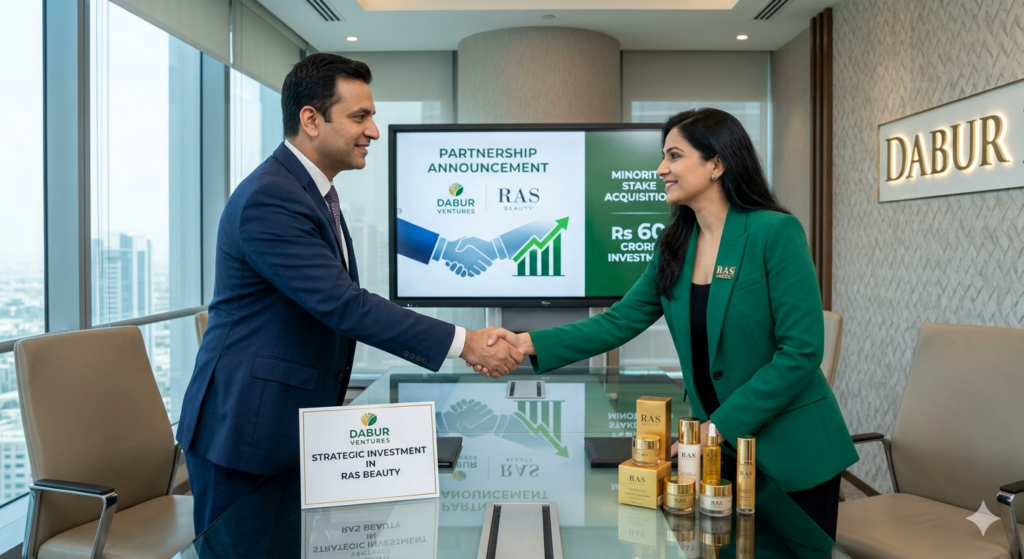
For Dabur, this investment is not just financial but directional:
- Portfolio Premiumization: Dabur strengthens its presence in the high-margin luxury skincare segment without diluting its mass brand equity.
- D2C Capability Building: RAS brings digital-native expertise—performance marketing, influencer-led growth, and direct consumer engagement.
- Ayurveda Reinvention: While Dabur is rooted in Ayurveda, RAS modernizes this narrative with global aesthetics and experiential packaging.
For RAS Beauty, the partnership provides:
- Capital for Scale: ₹60 crore enables expansion in product lines, technology, and offline retail.
- Distribution Leverage: Dabur’s supply chain and retail network can accelerate RAS’s omnichannel presence.
- Operational Backbone: Improved sourcing, manufacturing efficiencies, and regulatory support.
Risks and Integration Challenges
Despite strong strategic alignment, risks remain. Premium brands often lose authenticity when scaled aggressively under large corporations. Maintaining RAS’s artisanal appeal while leveraging Dabur’s scale will require careful brand governance. Additionally, Dabur must resist over-integration, allowing RAS operational independence to preserve its D2C agility.
Market Outlook and Prospects
India’s clean beauty market is expected to grow at a double-digit CAGR, driven by ingredient awareness, sustainability concerns, and rising disposable incomes. RAS is well-positioned in this trend, particularly in the premium tier where competition includes both global entrants and strong domestic players.
If executed well, this partnership could serve as a template for legacy FMCG firms: instead of building premium brands in-house, acquire and scale authentic niche players. For Dabur, success will depend on balancing scale with storytelling. For RAS, the challenge is to grow without losing its soul.