
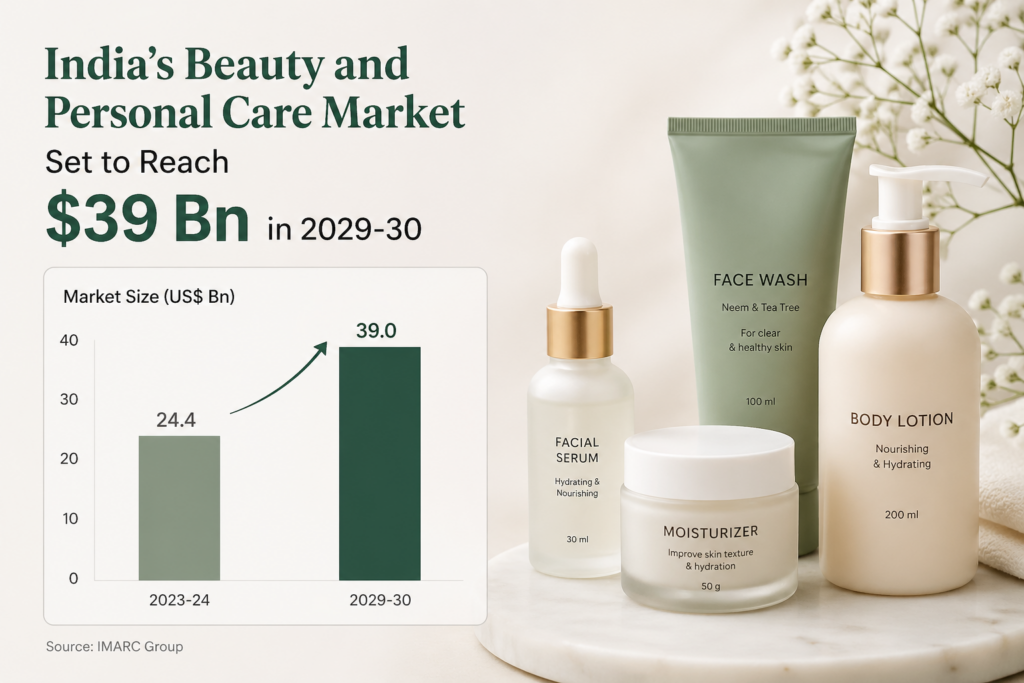
India’s beauty and personal care (BPC) market is undergoing a structural transformation, driven by digital adoption, evolving consumer preferences, and a strong shift toward self-care and premiumisation. According to a report by 1Lattice, the Indian BPC market is estimated at approximately ₹2.25 lakh crore in FY25 and is projected to reach nearly ₹3.25 lakh crore by FY30. This growth reflects a compound annual growth rate (CAGR) of around 7-8%, underpinned by rising disposable incomes, urbanisation, and increasing awareness of personal grooming and wellness.
A key driver of this expansion is the rapid rise of online channels. The online BPC segment has doubled since 2020, indicating a clear shift in consumer buying behaviour. Today, nearly 75% of consumers prefer purchasing beauty products online, attracted by convenience, wider product selection, competitive pricing, and access to reviews and influencer-driven content. Among platforms, Nykaa has emerged as the category leader, followed by Amazon and Myntra. These platforms have successfully combined commerce with content, offering tutorials, influencer collaborations, and personalised recommendations.
The report highlights that content commerce where social media and influencer content directly drive purchasing decisions has become a powerful force, especially among Gen Z consumers. This demographic is highly engaged with digital platforms and prioritises authenticity, ingredient transparency, and brand values. As a result, brands are increasingly investing in digital storytelling and community-building strategies.
Another emerging trend is the rise of quick commerce in the BPC sector. Currently contributing around 14% of total online BPC sales, quick commerce is expected to grow significantly, reaching approximately 30% by 2030. The category is particularly well-suited to this model due to the compact size and high repeat purchase nature of beauty products. Faster delivery timelines and impulse buying behaviour are likely to further accelerate this segment.
India’s young population is playing a pivotal role in shaping market dynamics. Gen Z consumers already account for nearly 45% of total BPC spending. This group is more experimental, trend-driven, and willing to spend on premium products. Their preferences are influencing product innovation, packaging, and marketing strategies across the industry.
Premiumisation is another defining trend. Consumers are increasingly willing to pay more for high-quality, ingredient-led, and scientifically backed products. The growing popularity of global beauty trends, particularly Korean beauty (K-beauty), has significantly influenced Indian consumer expectations. K-beauty’s focus on skincare routines, hydration, and long-term skin health has shifted the market away from quick cosmetic fixes toward preventive and holistic care.
This shift has created opportunities for new-age and direct-to-consumer (D2C) brands. Companies such as Minimalist, The Derma Co., Hyphen, mCaffeine, and Pilgrim are gaining traction by focusing on ingredient transparency, science-backed formulations, and targeted solutions. These brands are leveraging digital-first strategies to reach consumers directly, bypassing traditional retail channels.
At the same time, niche D2C brands are emerging to cater to specific consumer needs. For instance, Moxie Beauty and Fix My Curls focus on curly hair care, addressing a previously underserved segment. In the men’s grooming space, brands like Beardo and Bombay Shaving Company are expanding their product portfolios beyond basic hygiene to include skincare, beard care, and wellness products.
Men’s grooming, in particular, has emerged as one of the fastest-growing categories within the BPC market. The segment is evolving from basic hygiene products to more comprehensive, routine-based care solutions. Increasing awareness, changing social norms, and targeted marketing campaigns are encouraging male consumers to invest more in personal grooming.

~Ashish Dhir, Senior Director (Consumer and Retail) at 1Lattice
Looking ahead, the Indian BPC market is expected to remain highly dynamic and competitive. Key growth drivers will include continued digital penetration, innovation in product formulations, expansion of quick commerce, and increasing demand for sustainable and clean beauty products. Brands that can effectively combine science, storytelling, and convenience are likely to capture a larger share of this growing market.
In conclusion, India’s BPC sector is transitioning from a traditional, mass-market industry to a digitally driven, consumer-centric ecosystem. With strong growth projections, rising premiumisation, and evolving consumer expectations, the market offers significant opportunities for both established players and emerging brands.