

Kanpur-based RSPL Group has received environmental clearance to expand soda ash production at its Gujarat manufacturing unit, SOKA, increasing capacity to 1 million tonnes per annum. The approval effectively enables the company to double its existing annual output from 500,000 tonnes to 1,000,000 tonnes.
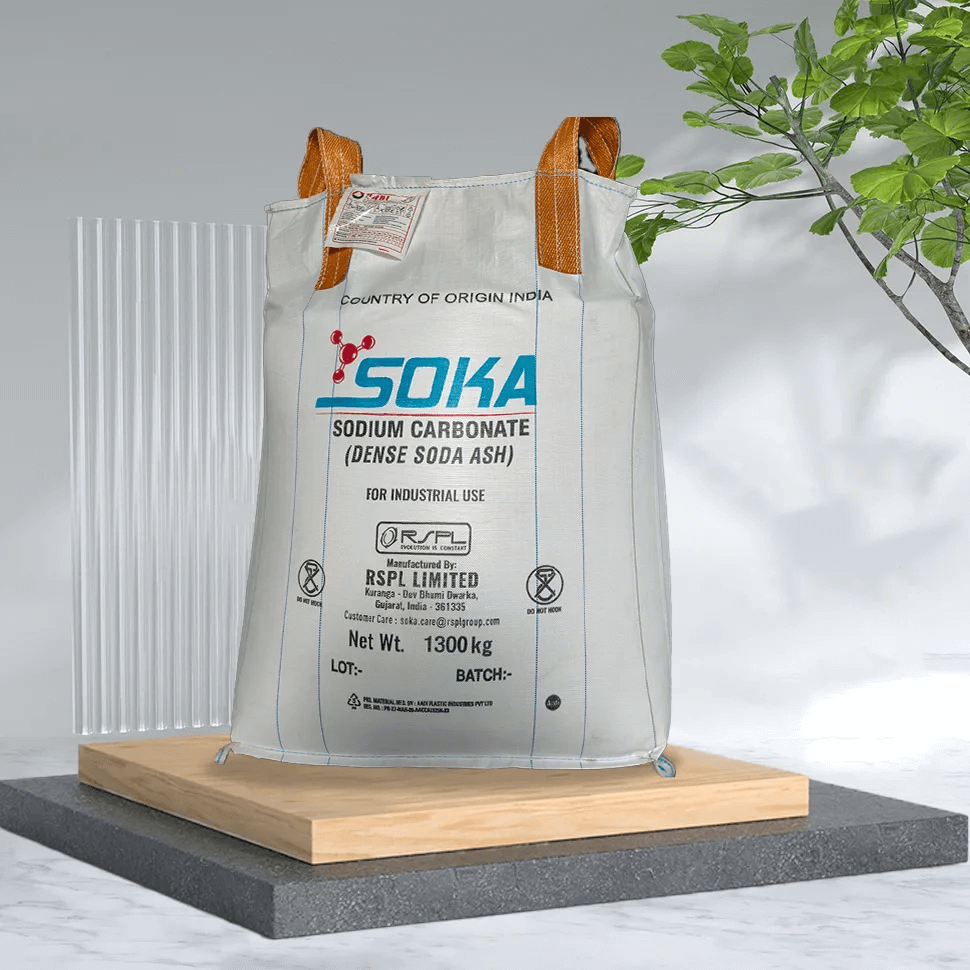
The company indicated that expansion activities are already underway, with interim plans to scale production to 750,000 tonnes per year over the next two years through an additional 250,000-tonne augmentation within its inorganic chemical complex. The long-term objective is to achieve full one-million-tonne operational capacity.
Application Portfolio and Industrial Linkages
Soda ash light is primarily deployed in detergent manufacturing and remains critical across water treatment, chemical processing, and pulp and paper segments. Soda ash dense is predominantly utilised in glass manufacturing, including flat, float, and container glass production, and also finds applications in metallurgy and related industrial processes.
Beyond detergents, downstream demand is supported by ceramics, dyes, textiles, and renewable energy-linked sectors such as solar glass manufacturing.
Operational Background
SOKA commissioned its soda ash manufacturing facility in 2019 in Gujarat’s Dwarka district. The greenfield plant, developed using NIOCHIM technology and engineered by Jacobs Engineering (WorleyParsons India), spans approximately 500,000 square metres and is supported by a captive co-generation power facility. The unit currently exports to nearly 50 countries.
According to company leadership, the expansion is positioned to reinforce domestic supply reliability, support India’s solar glass and renewable energy ecosystem, and contribute to regional employment and infrastructure development.
The development reflects ongoing capacity consolidation in India’s alkali chemicals segment, with implications for detergent formulators, glass manufacturers, and allied industrial value chains.